
Hearing market primer · Updated August 2026
Five giants built the market. OTC reopened it.
ELEHEAR enters with an AI-native thesis: clearer speech, consumer-grade economics, and a direct path to adults the traditional hearing-care model has not reached.
01 · Existing market players
Meet the Big Five.
Global hearing aids are concentrated around five scaled groups. Their advantage is not only device technology: it is the combination of trusted brands, professional channels, retail networks, fitting software, and decades of acoustic know-how.
Latest full-year revenue
Scale of the incumbent groups
Approximate USD billions
 Sonova
 Demant
 WS Audiology
 GN Group
 Starkey
USD equivalents use ECB reference rates from 19 August 2026 (EUR/USD 1.1605, EUR/CHF 0.9402, EUR/DKK 7.4759). Figures are full-group revenue and therefore include adjacent businesses; Starkey is private and its figure is an externally reported approximation.
Switzerland
Sonova
- Flagship hearing-aid brand: Phonak
- Devices, retail clinics, and cochlear implants
- Latest scale: CHF 3.606B revenue
Selected hearing brands
 Phonak
 Unitron
 HANSATON
Denmark
Demant
- Flagship hearing-aid brand: Oticon
- Hearing devices, Audika retail, and diagnostics
- Latest scale: DKK 22.971B revenue
Selected hearing brands
 Oticon
 Bernafon
 Sonic
Sonic Philips
Denmark / Singapore
WS Audiology
- Flagship brands: Signia and Widex
- Formed through the Widex–Sivantos combination
- Latest scale: EUR 2.579B revenue
Selected hearing brands
 Signia
 Widex
Widex Rexton
Denmark
GN Group
- Flagship hearing-aid brand: ReSound
- Hearing expertise alongside enterprise and gaming audio
- Latest scale: DKK 16.8B group revenue
Selected hearing brands
 ReSound
 Beltone
 Interton
 Jabra Enhance
United States
Starkey
- American-owned and privately held
- Built around the professional hearing-care channel
- Reported scale: approximately US$1B revenue
Selected hearing brands
Starkey Audibel
U.S. demand context
Hearing difficulty is already a mass-market condition.
Federal sources use different definitions, but they point in the same direction: tens of millions of American adults experience hearing difficulty, while a large share of people who could benefit from hearing aids have never used them.
The memorable scale
≈1 in 7American adults report some trouble hearingof U.S. adults reported any difficulty hearing in 2024.
CDC evidence ↗American adults report some trouble hearing.
NIDCD evidence ↗U.S. adults could benefit from using hearing aids.
NIDCD evidence ↗Why this page does not say “50 million Americans have hearing loss”: self-reported difficulty, measured bilateral hearing loss, disabling hearing loss, and the population age range are different measures. The federal figures above are presented with their original definitions rather than combined into a larger estimate.
02 · The US market reset
OTC changed access—not the need for good hearing care.
The FDA’s OTC category is a new route to purchase regulated hearing aids. It lets adults with perceived mild-to-moderate loss buy qualifying devices without a prescription, medical exam, or mandatory visit to a licensed seller.
The essential definition
OTC is a channel and fitting paradigm—not a synonym for “amplifier.”
OTC hearing aids remain medical devices. The category covers air-conduction devices for adults 18 and older with perceived mild-to-moderate hearing impairment, subject to federal requirements for output, labeling, and consumer warnings.
Congress creates the mandate
The FDA Reauthorization Act directed the agency to establish a new OTC category for hearing aids.
FDA issues the final rule
The rule defines device, labeling, output, and sales requirements for over-the-counter hearing aids.
OTC sales begin
Adults can buy qualifying devices in stores or online without a prescription or mandatory professional visit.
Context
OTC vs. prescription hearing aids
Both are medical devices. The main differences are intended user, access, fitting, and care delivery.
QuestionOver the counterPrescription
Who it is for
Adults 18+ with perceived mild-to-moderate hearing loss
People of any age and a wider range of hearing needs, including complex or severe loss
How it is purchased
Directly online or in retail; no prescription, exam, or licensed seller is required
Through a licensed hearing professional, usually after diagnostic testing
How it is fitted
Preset or user-adjusted; self-fitting models use software and user input
Professionally programmed, verified, and adjusted for the individual audiogram
Care model
Self-directed by default; remote support can be added by the brand
Professional counseling, fitting, and follow-up are generally part of the pathway
Regulatory point
Still a regulated medical device, with specific output and labeling requirements
A prescription medical device governed by the broader hearing-aid requirements
How OTC works in practice
From self-recognition to supported self-fitting.
- 01
Recognize the need. An adult notices difficulty with speech, TV, or conversation in noise.
- 02
Choose a regulated device. Compare intended use, return policy, support, and product labeling.
- 03
Fit and personalize. Use presets or a self-fitting app, depending on the device classification.
- 04
Test in real life. Evaluate speech clarity and comfort during the return window; use remote support when offered.
03 · ELEHEAR’s right to win
Audio-native team. Full-stack denoising. Consumer-grade products.
ELEHEAR is differentiated by a team built around AI audio, miniaturized hardware, consumer product design, international go-to-market, and company building—not by price alone.
Eric Miao
Founder & CEOFormer co-founder and CEO of ELEVOC; product, operations, and commercial audio systems.
Zhihao Guo
Chief Technology OfficerFormer audio technology lead at Alibaba DAMO Academy and Himalaya; deep AI-audio expertise.
David Hogan
Managing DirectorFormer CSO at Bragi and VP / Managing Director at Jabra and VT Headsets.
Tianyu Jiang
Chief Financial OfficerAI-focused corporate finance leader with fundraising and global capital-markets experience.
Jeffery Teng
Marketing DirectorConsumer-brand, creative, and international sales operating experience.
Current US portfolio
One platform, three clear use cases.
Three live SKUs are shown here, with prices checked 20 August 2026. ELEHEAR.com remains the source of truth for current prices, specifications, bundles, and availability.
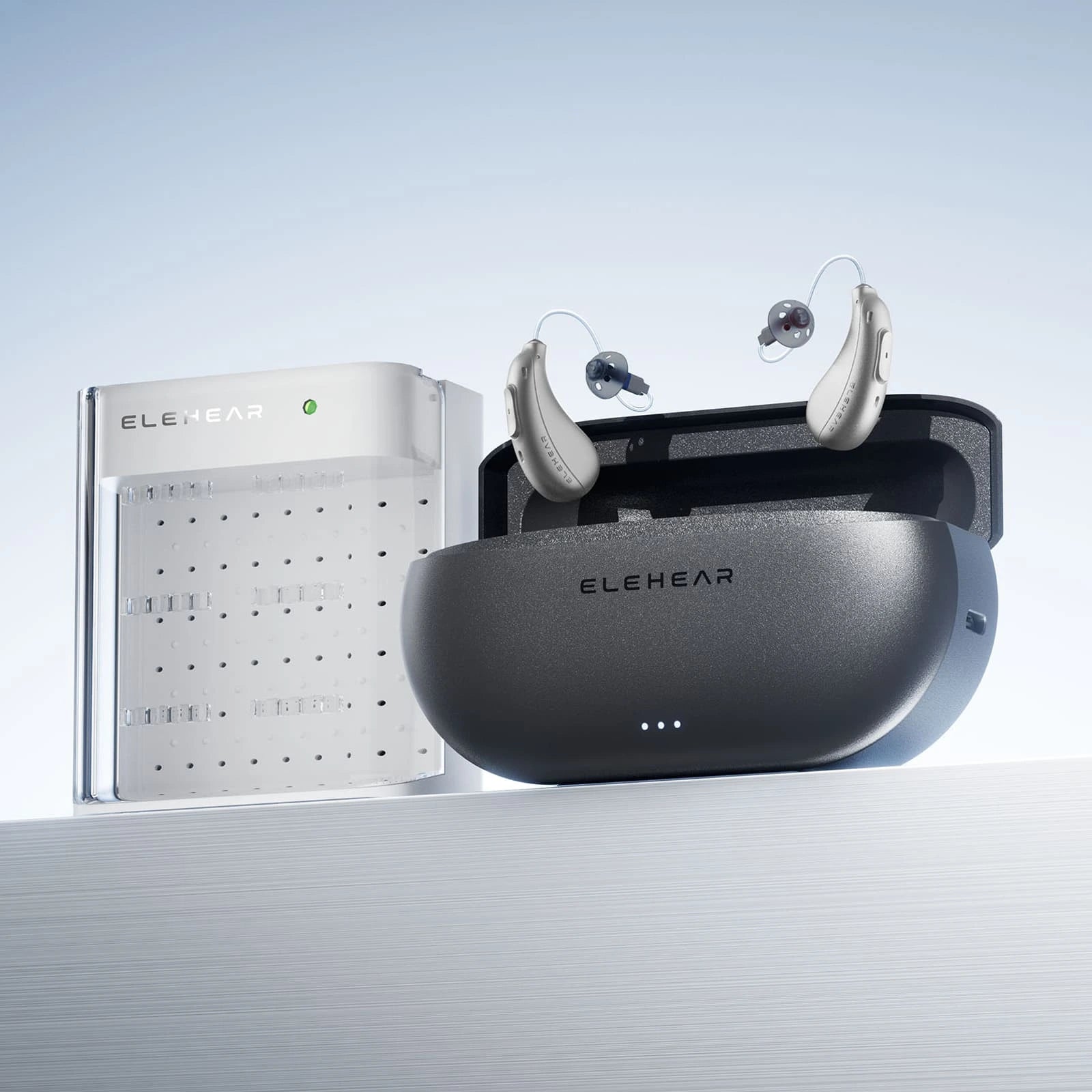
Flagship performance
Beyond Pro
VOCCLEAR® 2.0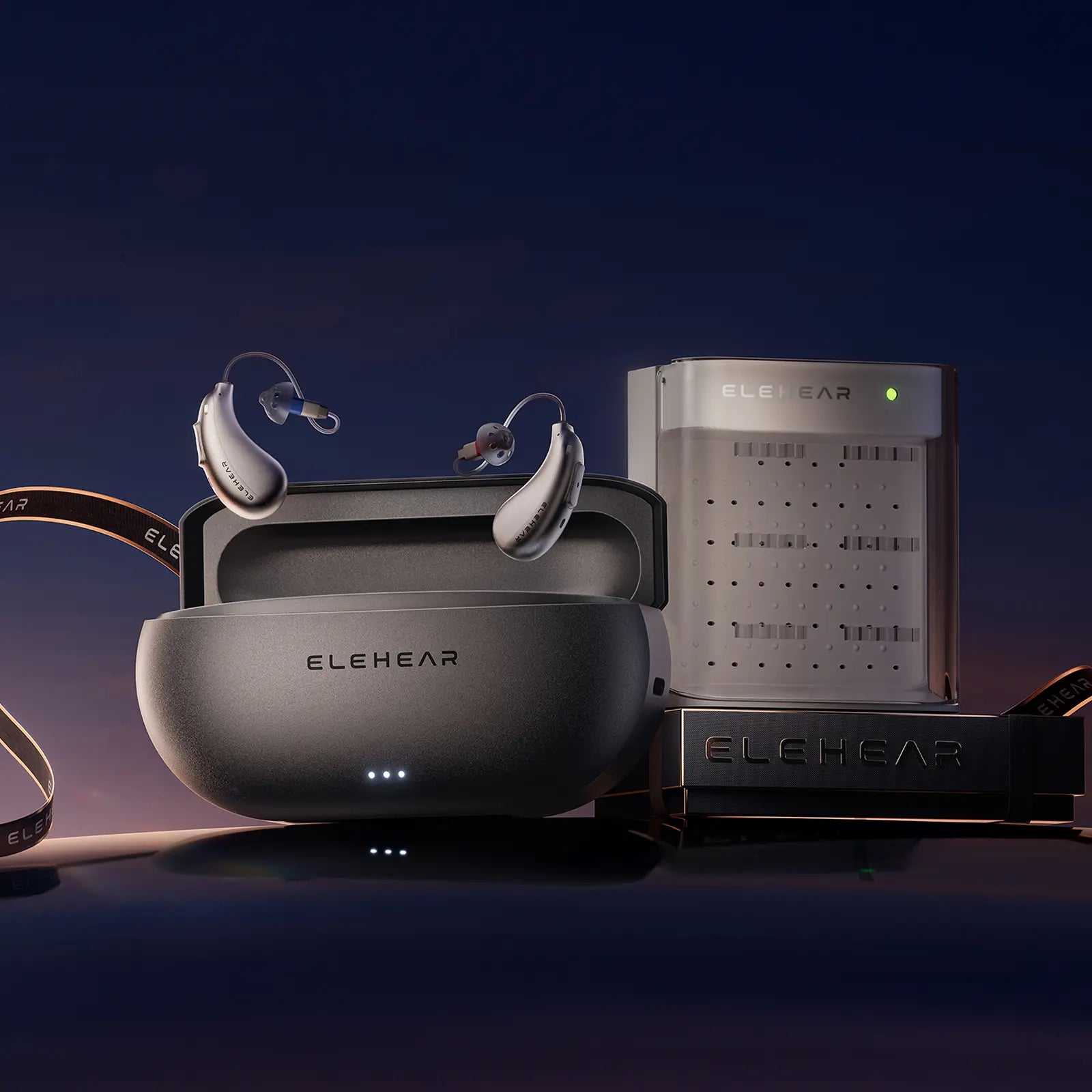
Everyday value
Beyond
VOCCLEAR®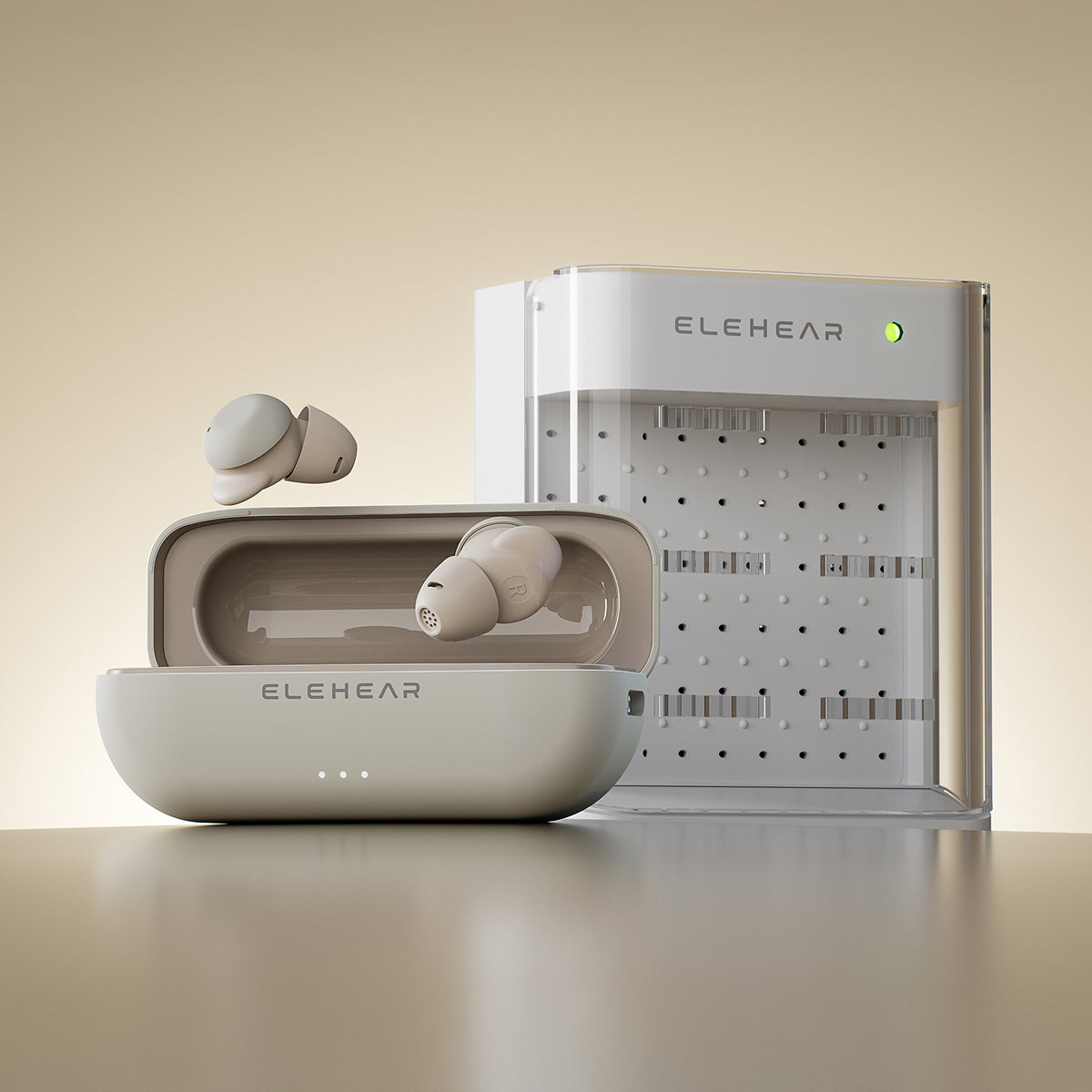
Earbud-style access
Delight
VOCCLEAR®Commercial momentum
Quarterly shipments are compounding quickly.
H1 2026 vs. H1 2025>3×
year-over-year shipment growth
Relative shipment scale
Indexed visualization reconstructed from the company overview’s quarterly shipment trajectory; absolute unit volumes were not disclosed. The source presentation also projects approximately 4× full-year growth for 2026. Figures are company-reported and unaudited.
Reference layer
Built to be checked, not just skimmed.
Every major number is dated, scoped, and linked to a primary or clearly identified independent source.
Quick glossary